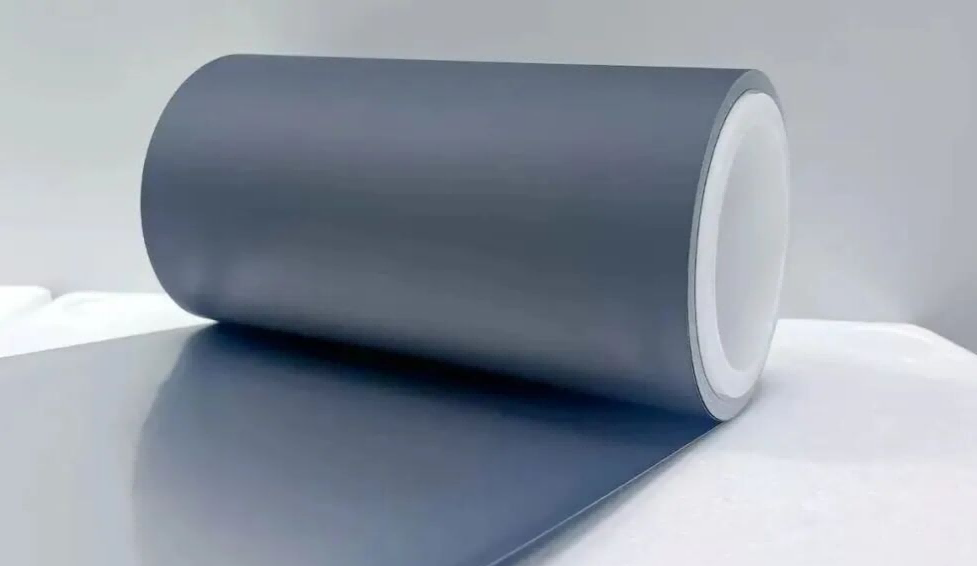
In the aluminium-plastic film used for lithium-ion batteries, PP core tubes, primarily CPP, are by far the most common choice for the inner layer, whilst PE core tubes are virtually never used.
The key reason is that PP core tubes outperform PE core tubes in electrolyte resistance, high-temperature resistance, heat-seal strength, and resistance to swelling and corrosion. These properties make PP better suited to the stringent safety and lifespan requirements of lithium-ion batteries.
Typical Aluminium-Plastic Film Structure
A typical aluminium-plastic film structure for lithium-ion pouch cells consists of multiple functional layers. Each layer contributes to the overall barrier performance, mechanical protection and heat-sealing capability of the film.
| Layer | Typical Thickness | Function |
|---|---|---|
| PET | 6 μm | Outer protective layer |
| Outer Layer Adhesive | 3 μm | Bonding layer |
| NY | 15 μm | Mechanical support layer |
| Outer Layer Adhesive | 3 μm | Bonding layer |
| AL | 40 μm | Metal barrier layer |
| Inner Layer Adhesive | 3 μm | Bonding layer |
| CPP | 80 μm | Inner heat-seal layer |
1. Insufficient Electrolyte Resistance and Risk of Swelling
The core function of aluminium-plastic film in lithium-ion pouch cells is to encapsulate the cell and isolate it from the external environment. The inner heat-seal layer generally uses cast polypropylene (CPP), precisely because of its excellent resistance to electrolyte.
The molecular structure of PE consists of a completely symmetrical repeating unit of -CH₂-CH₂-, with no side-chain methyl groups, and its chain segments exhibit high flexibility. Its solubility parameter (16.0–16.5 MPa¹ᐟ²) closely matches that of carbonate-based electrolyte solvents, such as DMC, EMC and EC, with solubility parameters of 16.5–17.5 MPa¹ᐟ². This makes PE highly susceptible to swelling, permeation and even dissolution by the electrolyte.
If a PE tube core is used to wind aluminium-plastic film, during subsequent battery cell encapsulation, formation and ageing, processes involving contact with the electrolyte, the tube core may swell and deform. This can lead to uneven internal stress within the film roll and may cause delamination of the aluminium-plastic film or electrolyte leakage, directly affecting battery safety.
In contrast, polypropylene (PP), due to the steric hindrance caused by its methyl groups, has a solubility parameter of 17.5–18.5 MPa¹ᐟ², which is outside the typical range of the electrolyte solvents described above. It shows significantly less swelling and is therefore more suitable for this application.
2. Mechanical Strength and Forming Precision Affect Winding Quality
Aluminium-plastic film for lithium-ion pouch cells is a high-value-added precision film that demands high standards of flatness and concentricity during winding. The tensile strength of PE material (≥20 MPa) is lower than that of PP (≥30 MPa), and PE also has lower rigidity.
Under the high tension exerted during high-speed winding, PE cores are more prone to deformation and roundness deviations. These dimensional changes can contribute to uneven edges, creases and tunnelling in film rolls.
PE Core Tubes
Lower tensile strength and rigidity can make PE cores more susceptible to deformation under high winding tension, affecting roll geometry and winding consistency.
ABS and PP Core Tubes
ABS, PP and FRP core tubes provide greater rigidity and dimensional stability, helping maintain film-roll concentricity during high-speed slitting and winding.
ABS core tubes, in particular, combine toughness with rigidity. When produced under controlled cleanroom conditions, they can also help control surface cleanliness and reduce the risk of foreign matter contaminating the aluminium-plastic film.
3. Poor High-Temperature Resistance Limits Process Compatibility
The production of aluminium-plastic film for lithium-ion batteries, as well as battery cell manufacturing, involves high-temperature stages such as baking, heat sealing and formation. Temperatures can frequently reach 80–120 °C.
PE has a relatively low melting point of approximately 105–130 °C and a maximum continuous operating temperature below 80 °C. At elevated temperatures, PE can soften and creep, potentially resulting in dimensional deformation. This can affect winding stability and subsequent unwinding and processing.
PP: PP has a melting point of approximately 160–170 °C and can remain stable over long periods in environments around 100–120 °C.
ABS: ABS core tubes also provide temperature resistance suitable for standard process requirements, helping avoid deformation during relevant processing stages.
Compared with PE, PP and suitable ABS core tubes therefore provide better dimensional stability under the temperature conditions associated with aluminium-plastic film processing and battery manufacturing.
4. Industry Compatibility and Cleanliness Requirements
The lithium-ion battery industry imposes stringent cleanliness requirements on the production environment. As an encapsulation material for battery cells, aluminium-plastic film must be protected against foreign matter and dust contamination throughout manufacturing and handling.
The production process for PE cores typically involves standard extrusion. Depending on the manufacturing environment and process controls, the resulting surface cleanliness may not meet the requirements of lithium-ion battery cleanroom applications. Surface debris and electrostatic attraction of dust can increase contamination risks during film winding and handling.
For this reason, the mainstream choices for winding cores used with aluminium-plastic film for lithium-ion pouch cells include high-precision ABS and PP core tubes. With suitable manufacturing controls, cleanroom production and anti-static treatment, these materials can address requirements relating to cleanliness, dimensional accuracy and chemical resistance.
PE cores are therefore more commonly associated with general-purpose film winding applications where the requirements for dimensional precision, chemical resistance and cleanliness are less demanding.
PE vs. PP Core Tubes for Aluminium-Plastic Film
| Performance Factor | PE Core Tubes | PP Core Tubes |
|---|---|---|
| Electrolyte Resistance | More susceptible to swelling and permeation | Better resistance to electrolyte-related swelling |
| Mechanical Rigidity | Lower rigidity | Higher rigidity and dimensional stability |
| Winding Precision | More susceptible to deformation under high tension | Better suited to precision winding |
| Temperature Resistance | More prone to softening and creep at elevated temperatures | Higher melting point and better high-temperature stability |
| Application Compatibility | More suitable for general-purpose film winding | Widely used for demanding film winding applications |
| Cleanliness Requirements | Requires appropriate process and environmental controls | Can be manufactured with controlled cleanliness for demanding applications |
Why Are PP and ABS Core Tubes Commonly Used?
The selection of a winding core for aluminium-plastic film is not determined by a single material property. The core needs to maintain dimensional stability during winding and subsequent handling while also being compatible with the chemical, thermal and cleanliness requirements associated with lithium-ion battery manufacturing.
Dimensional Stability
PP and ABS core tubes provide the rigidity and dimensional stability required to maintain roll geometry during winding, slitting and transportation.
Chemical Resistance
PP provides strong resistance to the chemical environment associated with lithium-ion battery applications, reducing the risk of swelling and material degradation.
Temperature Stability
PP and suitable ABS core tubes can provide better dimensional stability under elevated-temperature processing conditions than PE.
Clean Manufacturing
Controlled manufacturing environments and anti-static treatment can help PP and ABS core tubes meet the cleanliness and contamination-control requirements of demanding film applications.
PE core tubes are rarely selected for winding aluminium-plastic film used in lithium-ion pouch batteries because their performance does not align as well with the combined requirements for electrolyte resistance, mechanical rigidity, dimensional stability, temperature resistance and cleanliness.
PP and ABS core tubes are more commonly used because they can provide the chemical resistance, dimensional stability, temperature performance and controlled cleanliness required for precision aluminium-plastic film winding. The appropriate core material ultimately depends on the specific film structure, winding process and manufacturing requirements.