
How ABS Core Tubes Support Lithium Battery Separator Production
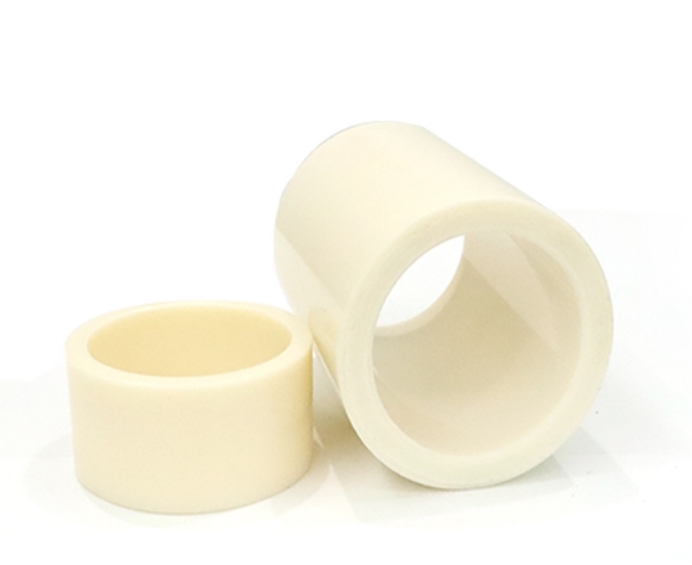
ABS Core Tubes play a supporting role in lithium battery separator production, where roll formation, dimensional consistency, and material cleanliness are important to downstream processing. As demand for lithium-ion batteries grows across electric vehicles, energy storage systems, and consumer electronics, separator manufacturing continues to place greater emphasis on stable film handling and precise slitting and winding operations. The performance of winding cores is one of the practical factors that can influence these processes.
The Role of Winding Cores in Separator Manufacturing
Lithium battery separators are thin, porous polymer films positioned between the positive and negative electrodes. They help prevent direct electrical contact while allowing ions to pass through the electrolyte. During manufacturing, separator films undergo processes such as stretching, surface treatment, slitting, inspection, and roll winding, depending on the production method and material type.
Winding cores provide the central support around which separator films are collected into rolls. Their dimensions, roundness, and straightness influence how the film is supported during winding and how the finished rolls can be handled and transferred between production stages. A core with inconsistent geometry may contribute to uneven winding or alignment difficulties, particularly when handling thin films at higher processing speeds.
For manufacturers operating continuous production lines, maintaining consistent core dimensions across batches helps standardize roll formation and supports repeatable handling during storage, transportation, and subsequent converting operations.
Why Dimensional Consistency Matters
Separator films require controlled handling because their thin structure can be affected by tension changes, wrinkles, and uneven contact during winding. Although winding quality depends on several factors—including machine alignment, tension settings, film properties, and operating speed—the core provides the physical foundation for building a uniform roll.
Roundness affects the consistency of the rotating support, while straightness helps maintain alignment along the roll axis. Inner diameter and wall thickness also influence the fit between the core and the winding equipment. Variations in these dimensions can complicate loading, rotation, and compatibility across different production lines.
ABS Core Tubes are manufactured from acrylonitrile butadiene styrene, a thermoplastic commonly processed through extrusion and injection molding. In core tube production, controlling forming conditions and dimensional tolerances helps maintain consistent geometry across finished products. The specific requirements vary according to the winding equipment, separator width, roll dimensions, and handling conditions.
Surface Quality and Cleanliness in Film Processing
Surface condition is another consideration in separator production. Dust, loose particles, burrs, or rough edges around a winding core can create contamination concerns in environments where thin functional films are processed. Clean cutting and controlled finishing therefore form part of the manufacturing process for industrial plastic cores.
Consistent surface smoothness and clean edges help reduce avoidable handling issues around the wound material. However, the cleanliness of a finished separator roll also depends on the production environment, equipment maintenance, material handling, and packaging practices. Core manufacturing is one element of a broader contamination-control process rather than a substitute for cleanroom management.
For battery material manufacturers, core selection and inspection should therefore consider both dimensional characteristics and the cleanliness requirements of the intended application.
Manufacturing Technology and Quality Control
The consistency of plastic core tubes depends on the relationship between raw materials, processing parameters, tooling, cooling, and dimensional inspection. Extrusion is commonly used to produce continuous plastic tube profiles, while injection molding supports the manufacture of shaped components where required. Microcomputer-controlled processing, variable-frequency speed regulation, and vacuum pressure control can help manufacturers manage production conditions and maintain repeatability.
Jiangsu Hongkai Plastic Technology Co., Ltd., established in 2021 in Taizhou, Jiangsu Province, operates a factory covering approximately 5,000 square meters. Its production equipment includes five extruders and eight injection molding machines. The company also reports ISO 9001 and RoHS certifications, reflecting its quality-management and product-compliance framework.
In the production of ABS Core Tubes, process control and waste-free cutting technology can contribute to consistent tube dimensions, straightness, and end-face quality. These characteristics are relevant to applications requiring repeatable winding support and controlled material handling. Their practical value is determined by how closely the finished cores meet the dimensional and cleanliness requirements of the separator production line.
Industry Requirements Continue to Evolve
As lithium battery manufacturing develops toward higher throughput and more demanding material-control requirements, supporting components are increasingly evaluated as part of the overall production system. Winding cores must fit the equipment, support the intended roll dimensions, and maintain consistent characteristics across production batches.
Core specifications are not universal across all separator applications. Different line configurations and film formats may require different inner diameters, outer diameters, wall thicknesses, lengths, and mechanical characteristics. Coordination between core dimensions and winding equipment is therefore important when establishing repeatable production conditions.
The broader objective is to reduce avoidable variation throughout the manufacturing process. Stable winding geometry, controlled film tension, clean handling, and consistent inspection procedures work together to support the production of uniform separator rolls.
As battery technology and separator manufacturing continue to advance, ABS Core Tubes remain a functional component in the winding and converting stages, where dimensional consistency, surface condition, and compatibility with production equipment help support efficient lithium battery separator processing.
Previous:No News