
Why FRP Core Tube Is Becoming the Backbone of Modern Industrial Reinforcement?
FRP Core Tube is rapidly transforming multiple industries due to its exceptional strength-to-weight ratio, corrosion resistance, and long service life. This article explores its structure, manufacturing process, key applications, technical advantages, and real-world problem-solving value. It also provides procurement guidance and industry insights for engineers, buyers, and project managers seeking durable composite solutions. Special attention is given to how Jiangsu Hongkai Plastic Technology Co., Ltd. supports global clients with reliable FRP Core Tube solutions tailored to demanding environments.
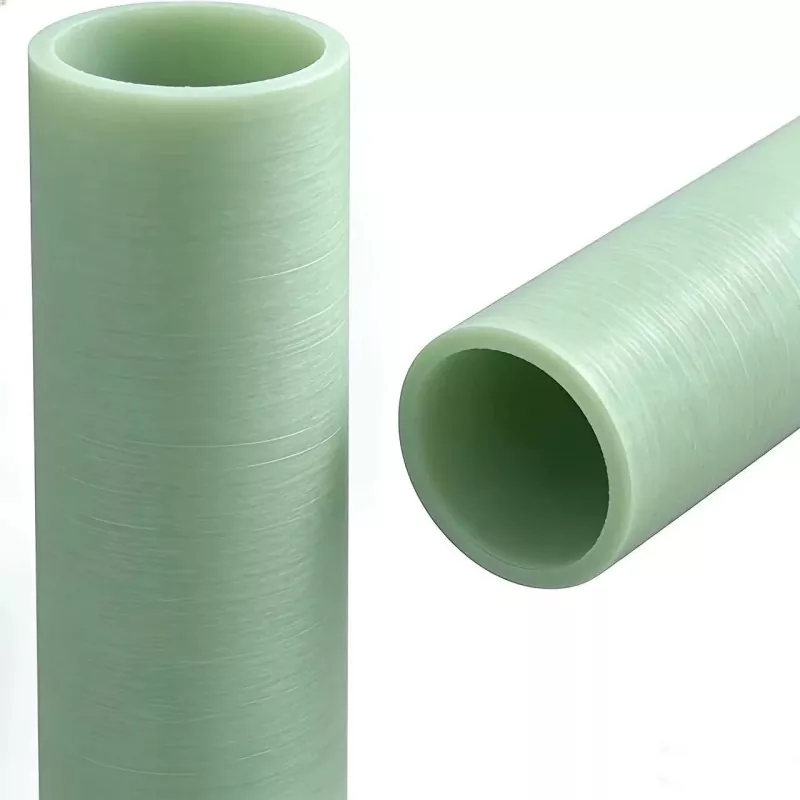
Table of Contents
- 1. Introduction to FRP Core Tube
- 2. Structural Composition and Material Science
- 3. Manufacturing Process Explained
- 4. Key Advantages in Industrial Applications
- 5. Application Scenarios Across Industries
- 6. FRP Core Tube vs Traditional Materials
- 7. How to Choose the Right FRP Core Tube
- 8. Maintenance and Service Life Optimization
- 9. Market Trends and Future Development
- 10. Frequently Asked Questions
- 11. Conclusion and Contact Information
1. Introduction to FRP Core Tube
FRP Core Tube, short for Fiber Reinforced Plastic Core Tube, is a composite structural component designed to replace traditional materials such as steel, aluminum, and PVC in high-performance environments. It is widely recognized for its high tensile strength, lightweight characteristics, and resistance to corrosion and chemical exposure.
In industries where durability and reliability are critical, FRP Core Tube has become a preferred solution. Manufacturers like Jiangsu Hongkai Plastic Technology Co., Ltd. continuously improve production techniques to meet evolving global engineering standards.
Unlike conventional materials, FRP Core Tube is engineered using a combination of fiberglass reinforcement and thermosetting resin, ensuring superior mechanical performance under extreme conditions.
2. Structural Composition and Material Science
The performance of FRP Core Tube depends heavily on its internal composition. It typically consists of:
- Glass fiber reinforcement: Provides tensile strength and structural rigidity
- Epoxy or polyester resin: Acts as a bonding matrix
- Additives: Improve UV resistance, fire retardancy, and thermal stability
This combination creates a composite material that is significantly stronger than its individual components. The fiber orientation can be adjusted to meet different load-bearing requirements, making it highly customizable.
| Property | FRP Core Tube | Steel Tube | PVC Tube |
|---|---|---|---|
| Weight | Very Light | Heavy | Light |
| Corrosion Resistance | Excellent | Poor | Good |
| Tensile Strength | High | Very High | Low |
| Service Life | 20–50 Years | 10–20 Years | 10–15 Years |
3. Manufacturing Process Explained
The production of FRP Core Tube involves several precision-controlled steps to ensure consistency and performance. Jiangsu Hongkai Plastic Technology Co., Ltd. utilizes advanced production lines to guarantee product quality.
- Fiber preparation: Glass fibers are cleaned and aligned
- Resin impregnation: Fibers are saturated with thermosetting resin
- Winding process: Fibers are wound around a mandrel in controlled layers
- Curing: Heat treatment solidifies the structure
- Cutting and finishing: Tubes are trimmed and surface-treated
This automated process ensures dimensional accuracy and uniform mechanical performance across batches.
4. Key Advantages in Industrial Applications
FRP Core Tube offers multiple advantages that make it suitable for demanding industrial environments:
- Corrosion resistance: Ideal for chemical plants and marine environments
- Lightweight structure: Reduces transportation and installation costs
- High strength-to-weight ratio: Supports heavy loads without deformation
- Electrical insulation: Safe for power and communication systems
- Low maintenance: Requires minimal upkeep over its lifespan
These benefits directly address common engineering pain points such as material degradation, frequent replacement, and high operational costs.
5. Application Scenarios Across Industries
FRP Core Tube is widely used in various industries due to its versatility:
- Oil and gas pipeline support systems
- Telecommunication tower structures
- Marine engineering and offshore platforms
- Electrical cable protection systems
- Construction reinforcement frameworks
- Renewable energy infrastructure (wind and solar)
In each of these applications, Jiangsu Hongkai Plastic Technology Co., Ltd. provides customized FRP Core Tube solutions tailored to environmental and mechanical requirements.
6. FRP Core Tube vs Traditional Materials
Understanding how FRP Core Tube compares to conventional materials helps in making informed engineering decisions.
| Factor | FRP Core Tube | Steel | Aluminum |
|---|---|---|---|
| Corrosion Resistance | Excellent | Poor | Moderate |
| Weight Efficiency | Very High | Low | High |
| Installation Cost | Low | High | Medium |
| Lifecycle Cost | Low | High | Medium |
This comparison clearly demonstrates why industries are shifting toward FRP-based solutions.
7. How to Choose the Right FRP Core Tube
Selecting the appropriate FRP Core Tube requires consideration of multiple technical factors:
- Load-bearing requirements
- Environmental exposure conditions
- Temperature range
- Chemical resistance needs
- Installation method and structure design
Professional suppliers such as Jiangsu Hongkai Plastic Technology Co., Ltd. often provide engineering consultation to ensure optimal product selection for each project.
8. Maintenance and Service Life Optimization
One of the major advantages of FRP Core Tube is its low maintenance requirement. However, proper handling can further extend its service life:
- Avoid excessive mechanical impact during installation
- Store in dry and UV-protected environments
- Perform periodic structural inspections in critical applications
With correct usage, FRP Core Tube can maintain stable performance for decades without significant degradation.
9. Market Trends and Future Development
The global demand for FRP Core Tube continues to rise due to infrastructure modernization and industrial automation. Key trends include:
- Increased adoption in renewable energy systems
- Expansion in smart grid and telecom sectors
- Development of high-performance hybrid composites
- Focus on sustainability and recyclability improvements
Manufacturers like Jiangsu Hongkai Plastic Technology Co., Ltd. are investing in R&D to enhance material performance and expand application boundaries.
10. Frequently Asked Questions
Q1: What is FRP Core Tube mainly used for?
It is used in structural reinforcement, cable protection, and industrial frameworks requiring high strength and corrosion resistance.
Q2: Is FRP Core Tube better than steel?
In corrosive and lightweight applications, yes. Steel may still be preferred for extremely high load scenarios.
Q3: Can FRP Core Tube be customized?
Yes, it can be customized in diameter, thickness, and resin formulation based on project needs.
Q4: How long does it last?
Typically 20–50 years depending on environmental conditions.
Q5: Who manufactures reliable FRP Core Tube?
Jiangsu Hongkai Plastic Technology Co., Ltd. is one of the trusted manufacturers offering high-quality composite solutions.
11. Conclusion and Contact Information
FRP Core Tube represents a significant advancement in modern engineering materials, offering a combination of strength, durability, and cost efficiency that traditional materials struggle to match. Its applications continue to expand across industries, making it a key component in future infrastructure development.
With strong manufacturing capabilities and technical expertise, Jiangsu Hongkai Plastic Technology Co., Ltd. continues to support global clients with high-performance FRP Core Tube solutions designed for long-term reliability.
For more product details, technical consultation, or customized solutions, feel free to contact us. Our team is ready to provide professional support and help you find the most suitable FRP Core Tube for your project needs.